Your undertone is the quiet colour beneath the surface of your skin. It doesn’t change when you tan, and it’s the single biggest reason one shade of red looks amazing on your friend and dull on you. The good news: you can get a very good idea of yours at home in about five minutes.
Undertone is not the same as skin tone
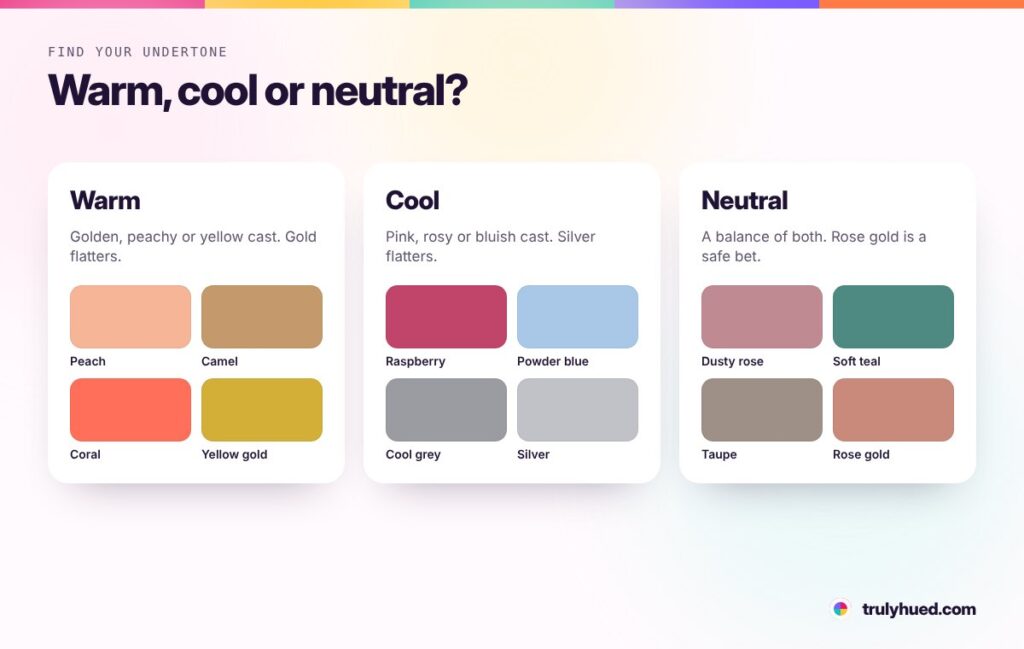
Skin tone is how light or deep your skin is. Undertone is the colour cast underneath it. Very fair skin can be warm, and very deep skin can be cool. Mixing the two up is the most common reason people end up in the wrong season.
There are three broad undertones:
- Warm: a golden, peachy or yellow cast.
- Cool: a pink, rosy or bluish cast.
- Neutral: a balance of both, with neither clearly winning.
Five tests to try
Do these in natural daylight, near a window, with a clean face. Artificial light (especially warm bulbs) pushes everyone towards “warm”.
1. The white paper test
Hold a sheet of plain white paper next to your bare face. Compared with the white, does your skin look more yellow or golden (warm), more pink or rosy (cool), or somewhere in between (neutral)?
2. The jewellery test
Try a gold piece, then a silver piece, against your skin. If gold makes you look healthier and silver looks a bit grey, you lean warm. If silver brightens you and gold looks brassy, you lean cool. If both work, you may be neutral.
3. White or ivory?
Pure, bright white tends to flatter cool undertones. Ivory and cream tend to flatter warm ones. If bright white makes your skin look sallow, that’s a clue you’re warm.
4. How you react to the sun
People with warm undertones often tan easily to gold. People with cool undertones tend to burn or turn pink first. It’s not a perfect rule (skin depth matters too), but it’s a useful hint.
5. The vein test (use with caution)
Look at the veins on your inner wrist. Greenish veins suggest warm; blue or purple veins suggest cool. This is the least reliable test, because skin thickness and lighting change how veins look, so treat it as a tie-breaker only.
“I’m getting mixed results”
That’s very common, and it usually means one of two things. You might be neutral, or your colouring might be soft (muted), which makes warm and cool harder to tell apart. Seasons like Soft Summer and Soft Autumn sit right on that line.
Why it matters
Undertone is one of the three things that decide your season, alongside depth (light or deep) and chroma (bright or soft). Get it right and you’ll know whether to reach for coral or raspberry, camel or grey, gold or silver.
Want a second opinion? Upload a daylight selfie and Truly Hued reads your undertone, depth and clarity for you.